
Adam + Alexandra
Designing a wedding day that could actually breathe
Some weddings look beautiful in photographs but feel chaotic while they are happening. Adam and Alexandra’s wedding was designed differently — built around emotional pacing, movement, atmosphere, and the invisible structure that allows a wedding day to actually breathe.
A wedding can look beautiful on paper and still feel stressful in real life.
The difference is usually transition management.
How long people spend travelling. Whether the bridal party is rushed. Whether family portraits interrupt emotional momentum. Whether the couple ever gets ten quiet minutes alone together.
This timeline was built backwards from emotional pacing first — not logistics alone.
Because your wedding day happens three times: while you plan it, while you live it, and while you relive it years later through photographs and film.
Most wedding timelines are built around logistics. This one was built around emotional pressure.
The entire wedding day — before anyone arrived.
Thirteen hours. Five emotional phases. Two parallel crews. The structure below wasn't designed for efficiency alone — it was designed to protect atmosphere, momentum, and the moments most couples don't realise disappear first.
Parallel Tracks Two crews opened the day in parallel — Simon & Raffie at the groom, Tim & John at the bride — converging at the cathedral for unified ceremony coverage.
Momentum Preservation The pacing curve was engineered, not observed. Every dip is a designed pause; every peak is a planned release.
Pressure Points Five known risks were mapped before the day began — each given a buffer, a redirect, or a redundancy.
The weddings that feel effortless
are usually the ones where invisible
structure existed first.
11:00 AM Day begins · Crew A mobilised
Groom preps — Croatian heat.
Smoke. Flares. Rakija. The day opened loud — and the work was to preserve the energy without letting it overtake the story.
Atmosphere
- Croatian traditions
- Rakija flasks
- Burnouts
- Flares
- Flags
- Classic cars
- Loud, layered, alive
A cul-de-sac of family, smoke, and vintage cars announcing the groom's exit. Pure cultural theatre — but still needing structure underneath.
Micro moments
- Divorced parents dynamicQuietly navigated — parallel emotional coverage with no forced staging.
- Cul-de-sac parkingTight street, hot day, restless engines.
- Outdoor flare timingA 90-second window — coordinated by hand-signal across two operators.
- Drone coordinationIsolated to one operator, ear-marked airspace, no overlap with smoke.
- Tradition triageDecided which moments to prioritise before the day, not during it.
Pressure points
- Congested street parking — neighbours, family fleet, taxi turnaround.
- Smoke from flares obscuring lensing for primary coverage.
- Fast-moving cultural moments unfolding without rehearsal.
- Multiple family groups arriving in waves and demanding camera time.
How it was engineered
- Parking redirected via adjacent reserve access — opened the day before.
- Drone operator isolated early, briefed before crowd arrival.
- Key traditions ranked in advance with the groom's family lead.
- Teams split for layered coverage — wide and intimate, never doubled.
Drone operator briefed forty-seven minutes before the first family vehicle arrived.
Two reserve parking lots opened by 09:30. The neighbours were told the day before.
Lead crew identified fourteen priority guests by face — no clipboard, no list.
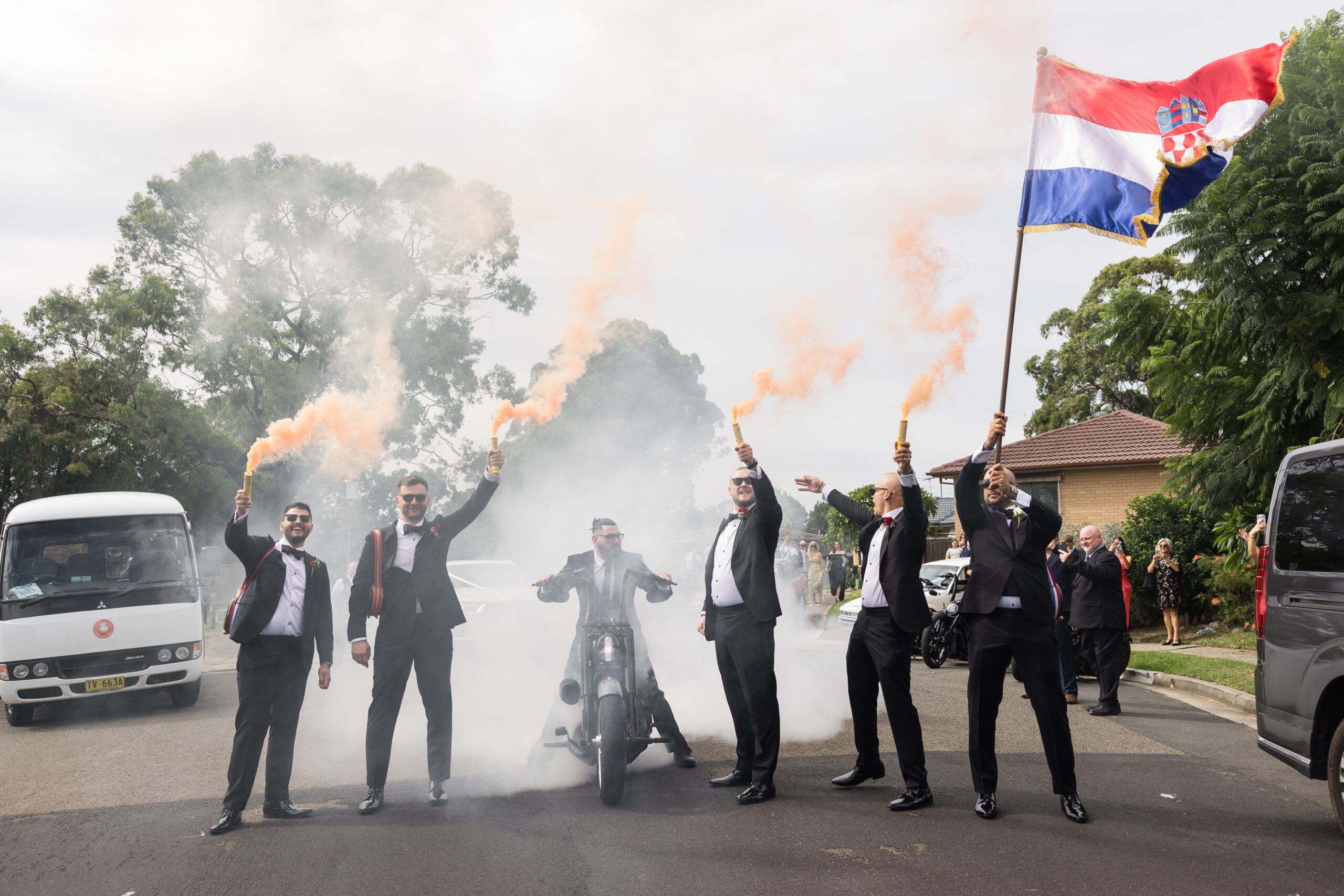
The flare burned for ninety-two seconds.
Three lenses were already loaded.
11:30 AM Parallel · Crew B at the bride
Bride preps — quiet contrast.
Two streets away, the emotional temperature changed completely. Soft window light. Held breath. A grandmother joining by Facetime. A mother’s first look that needed space around it.
Atmosphere
- Soft interior light
- Grandmother on Facetime
- Mother’s first look
- Dress reveal
- Quiet family movement
- Details without over-staging
- Stillness before the ceremony
This part of the day was never meant to compete with the groom’s energy. It needed to become the counterweight.
Micro moments
- Grandmother on FacetimeShe was too unwell to attend, so the room paused and brought the wedding to her.
- Mother’s first lookAllowed to unfold without interruption, direction, or reset.
- Hands before the dressThe small nervous movements before the room became aware.
- Window-light portraitsCaptured quickly, before the emotional rhythm shifted.
- Final quietA short pause protected before departure.
Pressure points
- Hair and makeup running close to departure time.
- Important family moments happening outside the physical room.
- Too many family members entering during the reveal sequence.
- Detail coverage threatening to overtake emotional coverage.
- Departure timing needing to align with cathedral arrival.
How it was engineered
- Coverage stayed loose enough to follow the Facetime moment without interrupting it.
- Room movement was kept quiet so the call could remain emotionally present.
- Mother’s first look was protected as its own moment, not folded into the reveal.
- Details were captured in short passes instead of one long block.
- Departure rhythm was protected so the bride arrived calm, not rushed.
The grandmother Facetime and the mother’s first look were treated as separate emotional beats — both protected, neither restaged.
Detail filming was compressed so the family sequence had room to breathe.
The bride’s departure was paced to arrive at the cathedral with calm still intact.
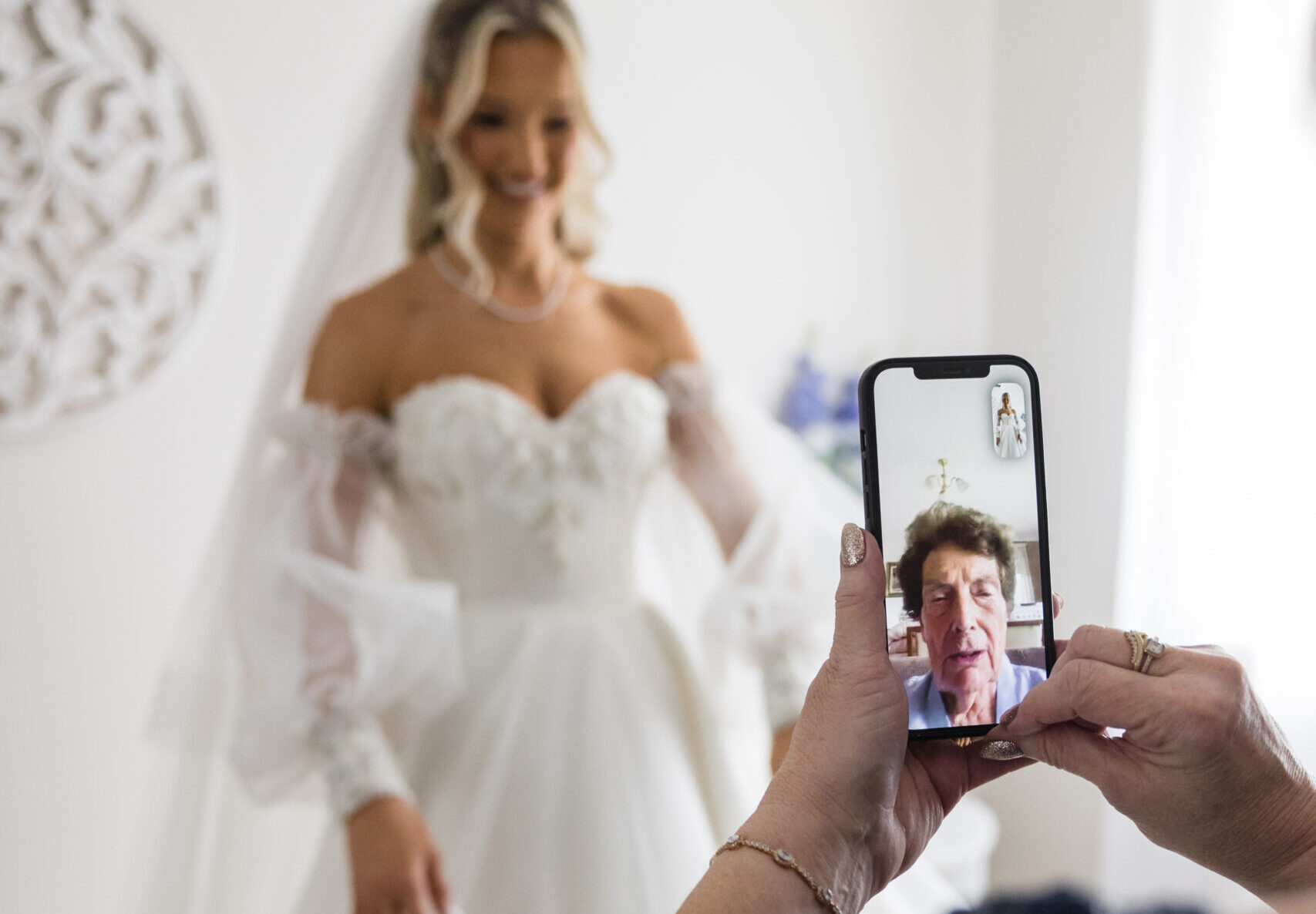
Her grandmother was too unwell to attend.
So the wedding arrived to her instead.
3:00 PM Crews converge · St Mary’s Cathedral
Ceremony — St Mary’s Cathedral.
Stone, scale, and silence. The cathedral did most of the storytelling — our role was to protect the stillness and let the day narrow to one aisle.
Atmosphere
- Cathedral scale
- Long aisle movement
- Held silence
- Formal family presence
- Vows and rituals
- Architectural framing
- Controlled restraint
This was the tonal reset of the day. After the heat of the morning, the ceremony needed to feel still, spacious, and certain.
Micro moments
- The aisle before arrivalThe room settling before Alexandra appeared.
- First sightlineThe moment Adam saw her enter the cathedral.
- Hands during vowsSmall movements held inside a very large room.
- Family reactionsPreserved without crossing the ceremony line.
- Aisle exitThree operators, one release of emotion, no unnecessary movement.
Pressure points
- Large cathedral scale making intimate emotion easy to lose.
- Operator movement needing to remain almost invisible.
- Family reactions unfolding across a wide room.
- Aisle exit happening quickly after a long formal build.
How it was engineered
- Camera positions were locked before the ceremony began.
- Wide coverage protected the scale while long lenses preserved emotion.
- Operators held position through key rituals instead of chasing angles.
- The aisle exit was pre-covered from multiple points before it happened.
The ceremony was covered with restraint — enough presence to preserve the emotion, not enough movement to disturb it.
The aisle exit was treated as a release point after the stillness of the ceremony.
The transition out of the cathedral was protected so the day did not collapse into post-ceremony congestion.
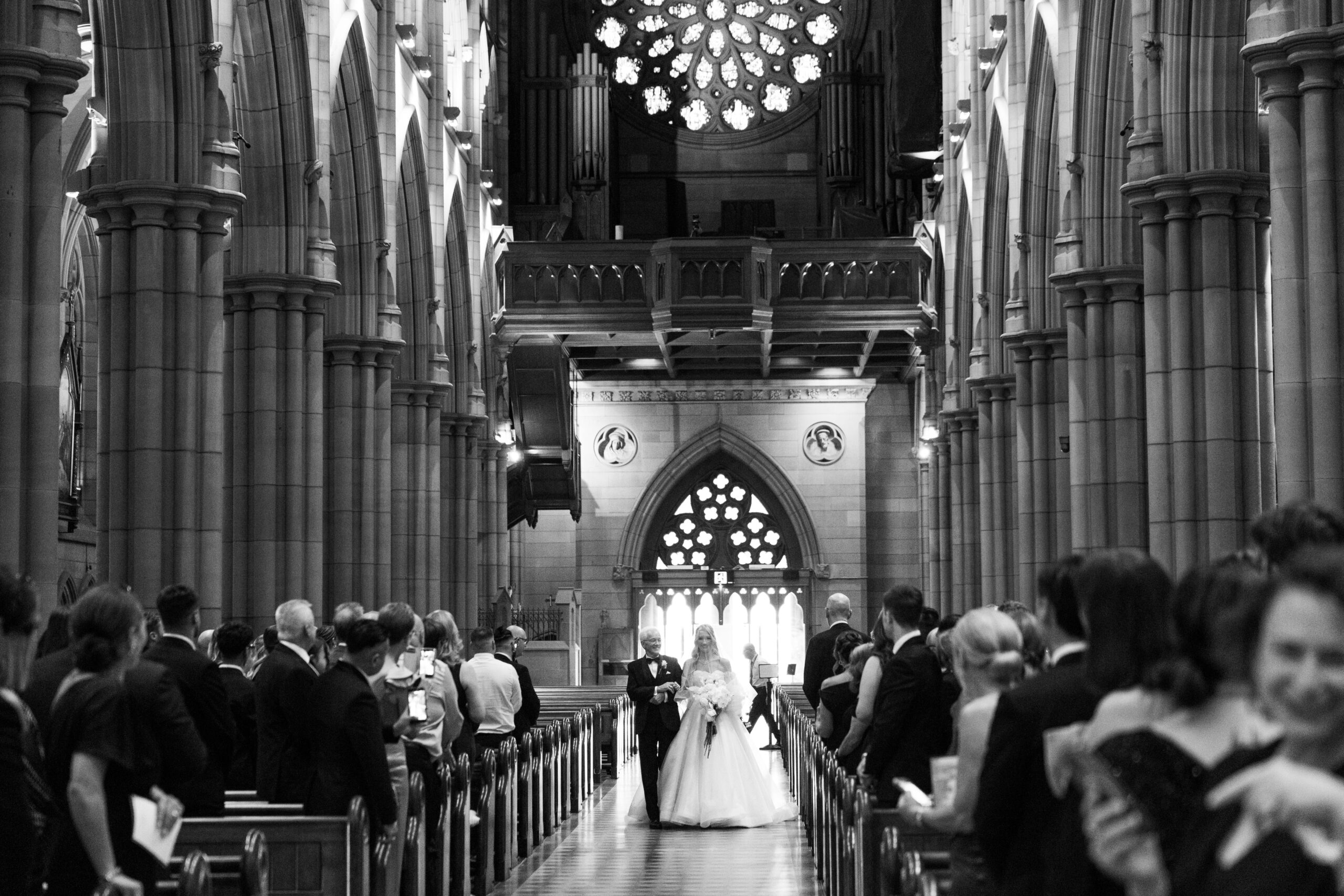
For everyone else, it lasted a few seconds.
For her father, probably much longer.
4:30 PM City begins · Bridal party in motion
City photoshoot — Sydney, moving.
After the stillness of the cathedral, the city gave the day its release. Champagne. Movement. A bridal party spilling into the laneway before the reception rhythm began.
Atmosphere
- City laneway energy
- Champagne spray
- Moving bridal party
- Post-ceremony release
- Car arrival sequence
- Urban texture
- Fast editorial rhythm
This was not a posed portrait block. It was a controlled release of energy after the emotional restraint of the ceremony.
Micro moments
- The champagne burstA few seconds of chaos, held just long enough to become a frame.
- The car arrivalThe couple entering the city sequence with the bridal party around them.
- Laneway movementWalking coverage designed to feel lived, not staged.
- Group energyLetting the bridal party lead the noise before resetting the couple for portraits.
- Reception transitionKeeping the mood high without letting the timeline drift.
Pressure points
- Very short city window between ceremony and reception.
- Champagne moment needing to happen safely and quickly.
- Large group movement in a public laneway.
- Energy risk — too much chaos can flatten the couple’s portrait time.
How it was engineered
- The champagne moment was placed early, before the bridal party energy dropped.
- Operators split between wide movement, reaction, and couple coverage.
- The laneway sequence was kept moving so the frame stayed alive.
- Portrait time was protected after the group release, not before it.
The city sequence worked because it was not over-controlled. The energy was allowed to happen — inside a very tight window.
The champagne burst became the release point between cathedral formality and reception momentum.
The group sequence was completed before the day became logistically heavy again.
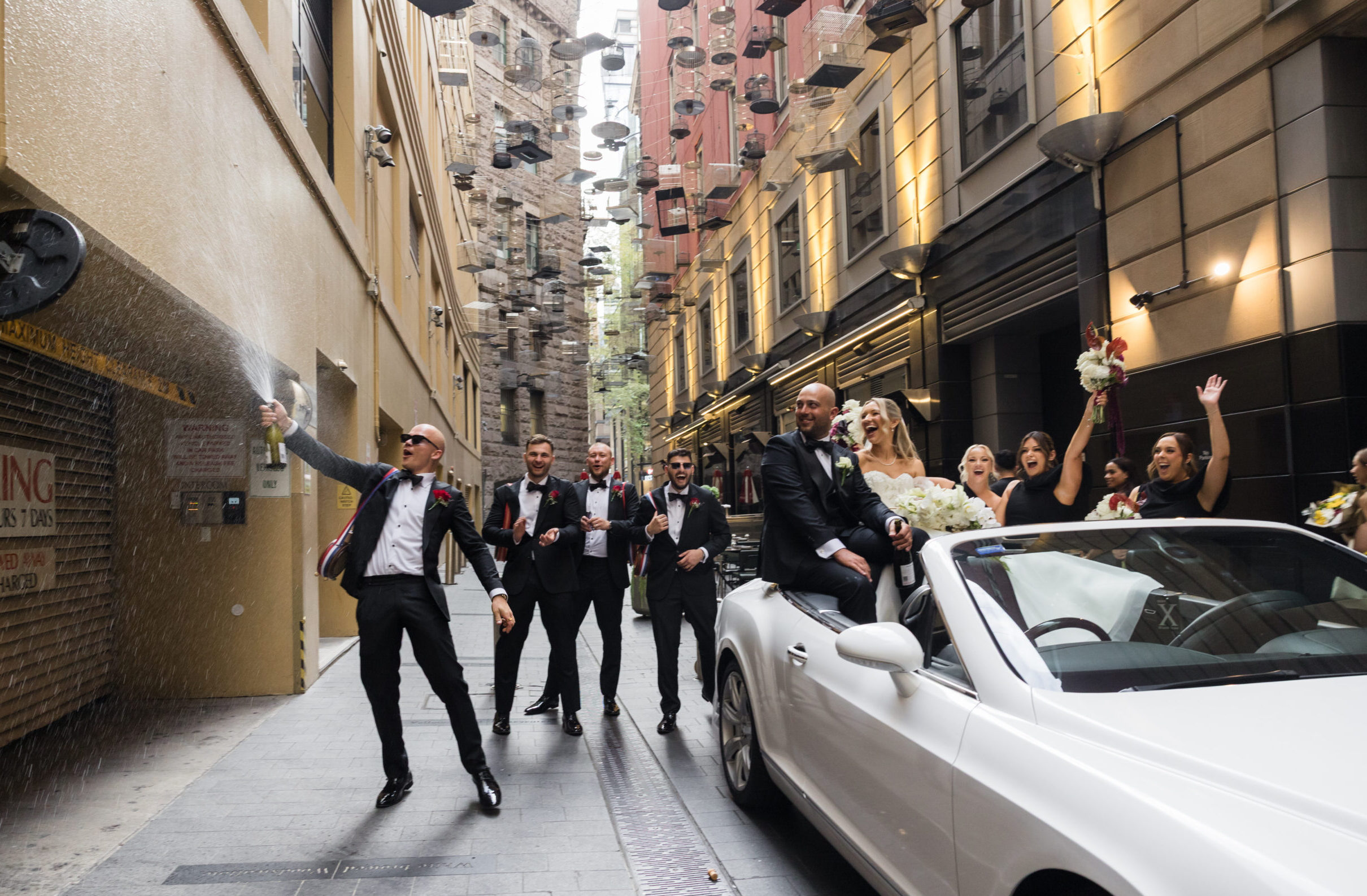
The city did not need posing.
It needed timing.
6:00 PM Reception begins · Momentum compresses
Reception — where time accelerates.
Once the reception began, the pacing changed again. Entrances. Speeches. Lighting shifts. Guests settling into atmosphere. This is the part of the wedding day most couples remember least clearly — because it moves the fastest.
Atmosphere
- Guests arriving into warm light
- Speech transitions
- Changing emotional rhythm
- Dancefloor anticipation
- Low-light movement
- Candlelit tables
- The day beginning to blur
Reception coverage is less about directing moments and more about staying ahead of disappearance.
Micro moments
- Room revealThe atmosphere guests walked into for the first time.
- Speech reactionsOften quieter and more revealing than the speeches themselves.
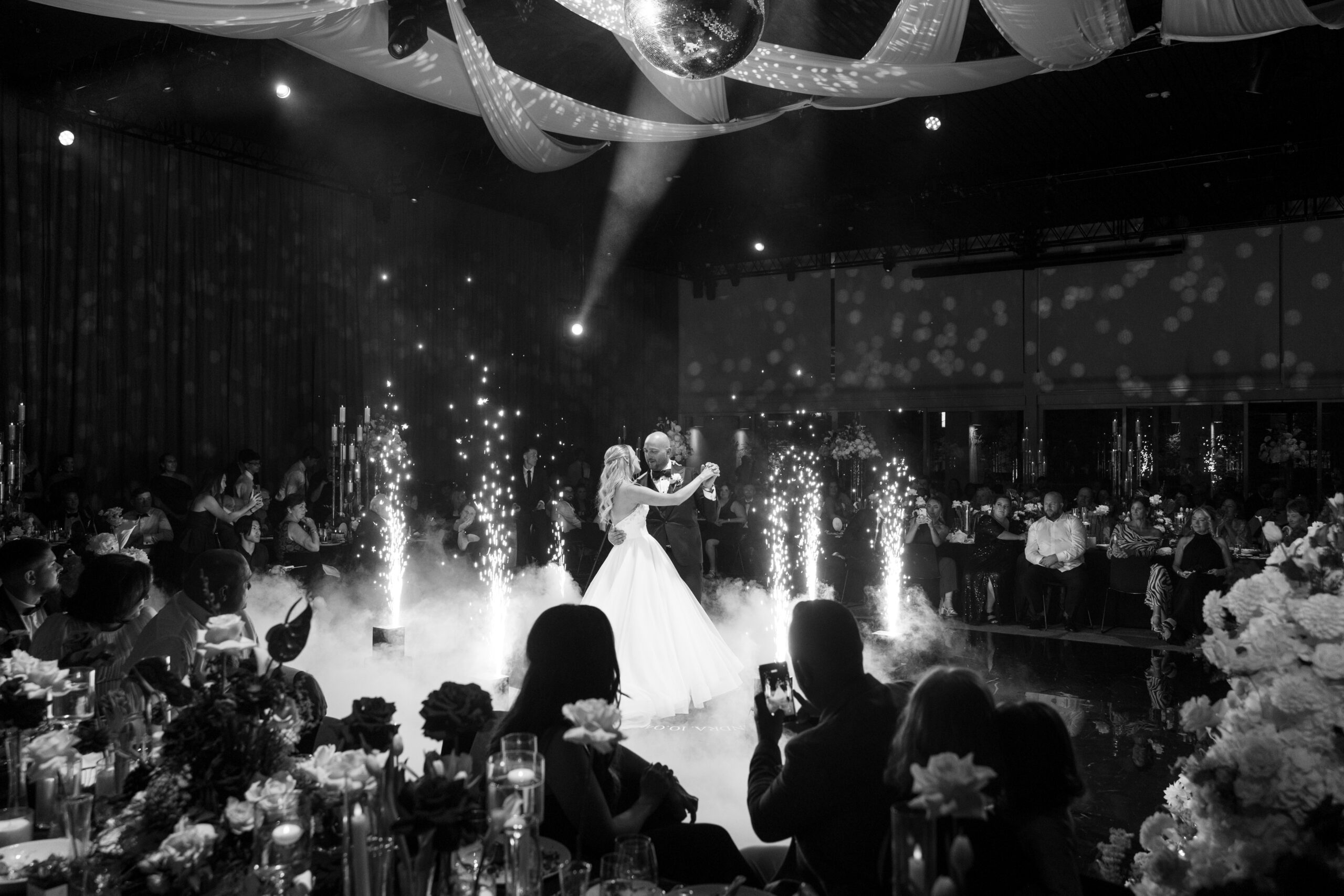
- The first dance resetThe room narrowing back to two people again.
- Guests forgetting camerasThe point where presence overtakes awareness.
- Late-night atmosphereThe final emotional texture before the day disappeared.
Pressure points
- Lighting changing constantly throughout the night.
- Reception timelines compressing faster than expected.
- Important reactions happening simultaneously across the room.
- Fatigue beginning to affect pacing and awareness.
How it was engineered
- Key transitions were pre-positioned before they happened.
- Speech coverage prioritised reactions, not just speakers.
- The first dance was lit to preserve atmosphere without flattening the room.
- Coverage became less visible as the night became more emotional.
The reception moved faster emotionally than any other part of the day — which is why structure mattered most here.
The first dance became the final stillness before the reception dissolved into movement again.
Every major transition was protected so atmosphere never collapsed into logistical interruption.
Eventually, every wedding becomes memory.
The question is what survives first.
The weddings that feel effortless are usually the ones where invisible structure existed first.
Adam and Alexandra’s wedding was never just a sequence of locations. It was a sequence of emotional states — each one protected, paced, and given enough room to become memory.
That is the difference between documenting a wedding and designing how the day is allowed to feel while it is happening.
A wedding can look beautiful on paper and still feel stressful when the pacing is wrong.
This is why we begin with a Planning Session before anything else. Not to discuss packages — but to understand how your wedding day should actually feel while it is unfolding.
Because your wedding day happens three times: while you live it, while you remember it, and while you relive it years later through photographs and film.
